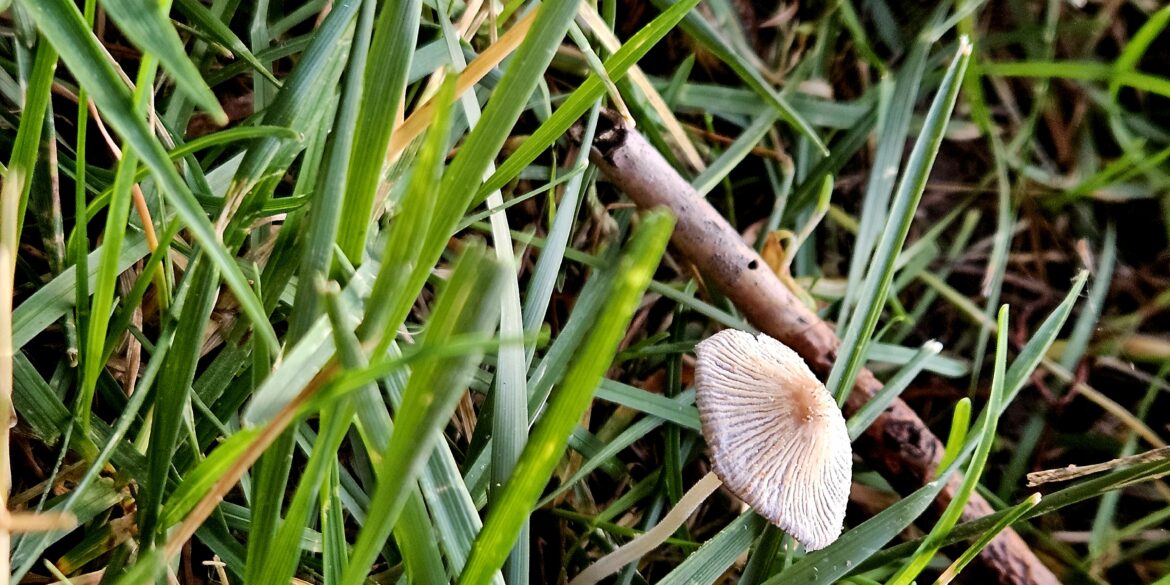
While wandering through my yard recently, I spotted a tiny mushroom nestled among the grass. Delicate and almost impossibly small, it looked like a miniature paper umbrella rising from the lawn. After a little investigation, I identified it as a Pleated Inkcap (Parasola plicatilis), a fascinating mushroom known for its dainty pleated cap and incredibly short life span. These tiny fungi often appear overnight after rain and usually disappear again within a day.
As I was taking photos, I found myself thinking about how easy it would have been to walk right past it. Most of us do. Yet this tiny mushroom was a reminder that entire worlds exist just beyond our notice, waiting for us to slow down and take a closer look.
And that brings us to one of my favorite facts about mushrooms. Did you know that the mushroom isn’t actually the main organism?
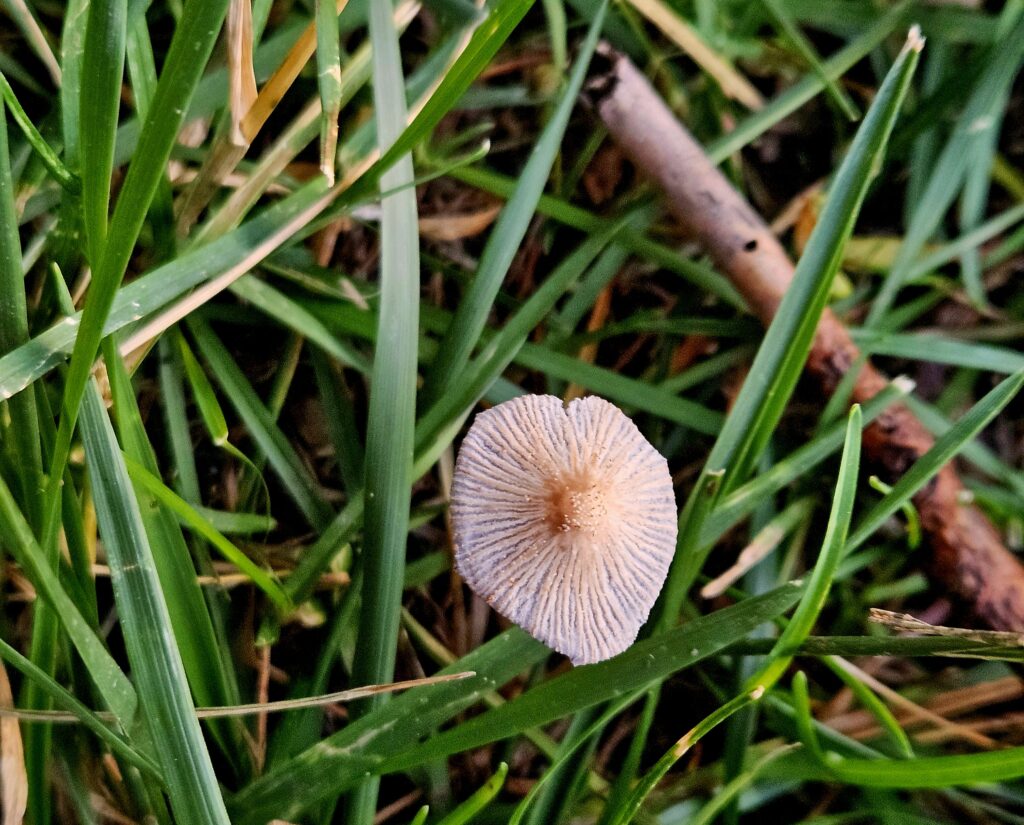
The mushroom is the fruiting body!
Much like an apple on a tree, the mushroom we see is simply a reproductive structure designed to produce and release spores. The real fungus, the part that makes up the majority of the organism, is usually hidden from view. Beneath our feet lies an intricate network of thread-like structures called mycelium. This underground web can spread through soil, wood, fallen leaves, and other organic matter, quietly carrying out some of nature’s most important work.
A single fungal network can cover acres of land and persist for decades or even centuries, even though the mushrooms it produces may last only a few days. They’re a reminder that some of the most important things in nature happen out of sight.
In many ways, fungi are the recyclers of the natural world. Without them, forests would be buried beneath layers of dead leaves, fallen branches, and decaying plants. Fungi break down these things and return valuable nutrients to the ecosystem, making them available for new life. But fungi do far more than clean up nature’s leftovers. Many species form partnerships with plants through structures known as mycorrhizae. In these relationships, fungi help plants absorb water and nutrients from the soil, while the plants provide sugars created through photosynthesis. Scientists continue to study these remarkable connections and the ways fungal networks influence the health of ecosystems.
When you think about it, that tiny Pleated Inkcap standing in my lawn was only the briefest glimpse of something much larger. The mushroom itself will only last part of a day, but the hidden mycelium beneath it could have been there for months, years, or even longer. I think that’s one of the reasons fungi are so magical.
🌿 Learn More: Nature Near You
Nature Near You is The Nature Collective’s community science project on iNaturalist. Whether you’re documenting mushrooms, birds, butterflies, native bees, wildflowers, or anything else you discover outdoors, your observations help contribute to a growing record of biodiversity.
Learn more and join the project here:
https://naturecollectivesl.com/inaturalist-community-projects/
As I photographed this little Pleated Inkcap, I couldn’t help but think about how much biodiversity surrounds us every day, often unnoticed. A mushroom no larger than a coin can reveal an entire underground world of connections, decomposition, and renewal. That’s one of the reasons I’m so excited about The Nature Collective’s new iNaturalist community project, Nature Near You. It’s an invitation to become curious about the living things around us, whether that’s a mushroom in the lawn, a native bee visiting a flower, a bird at the feeder, or a butterfly along a trail. Every observation tells a story, and together those stories help paint a picture of the biodiversity that surrounds us every day.
Who knows? Your next observation might reveal a hidden world beneath your feet.
Have you spotted any interesting fungi lately? We’d love to see your discoveries in Nature Near You!
Nerdy for Nature is a blog series by Emm Evergarden, founder of The Nature Collective SL, dedicated to exploring the wonders of the natural world. Through nature facts, conservation topics, and stories from the wild, Emm hopes to inspire curiosity, encourage learning, and empower readers to make a positive difference for nature in their everyday lives.